


Everyone has a few memories of Elmer Fudd out hunting “wabbits” during rabbit season. If you raise your own rabbits you never need to worry about when that season is. Many of us dream and work toward a more self-sufficient lifestyle, preferring to raise our own food and provide a healthier, more natural diet for our families. Raising rabbits can also be a true family project, as they are small and so easy to care for that they can even be maintained by young children. If you’re interested in providing a healthier meat source for your family than you can normally get at your local grocer, then this article will definitely be of interest to you. Rabbit is one of the meats highest in protein content; it is delicious and nutritious and it is also one of the easiest and least expensive types of livestock to raise and process.
 The first fact that many people look at when considering raising their own rabbits for meat is what kind of return they will get for their efforts. Basically, it’s rather simple—the average, everyday corner grocers do not normally carry rabbit on their meat counters. If, by chance, they do, then you will find it to be much more expensive than the other meat cuts that are regularly available. Purchasing rabbit meat commercially is so expensive because it’s not as readily obtainable as most other commercial meats in the U.S. When considering today’s health-conscious consumer, rabbit meat is also leaps and bounds above the average hamburger. For example, rabbit meat is very high in protein at about 20%; it’s very lean with only about 10% fat compared to the average chicken meat at 11%. The calorie value in rabbit is approximately 795 calories where chicken has about 810 calories. To top it all off rabbit is all white meat and low in cholesterol to boot. This type of nutritional information is one of the main reasons that many people are checking into the why and how of raising rabbits.
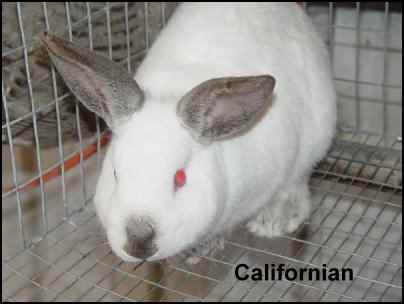
Now that you have an idea of why rabbit meat is gaining in popularity on the family table, the next question is how you will go about raising them to butcher. The first step when deciding to raise your own rabbits for meat is to pick a breed type. It is important to choose a breed that is bred for meat and not a hobby or pet type rabbit. The most common breeds chosen for meat production are the New Zealand White and the Californian. Also used for meat production by some include Champagne D’Argent, New Zealand Red, Rex, American Chinchilla. Flemish Giants can be used but because of the amount of bone they are more often used to crossbreed with the New Zealand White and the Californian.
The average meat production rabbit matures at around 10 -12 pounds, of course Flemish Giant crosses might be just a little heavier. Keep this in mind when selecting the rabbits you use as your breeders, so as to be careful not purchase a mini type breed by mistake.
My personal choice for a meat rabbit is the New Zealand White, however, we also raise Californians and a couple of Flemish Giant Cross. The reason I prefer the New Zealand is the skin of this breed will more easily separate from the meat than other breeds. This makes for a faster and easier butcher which counts for a lot if butchering several rabbits in a single day.

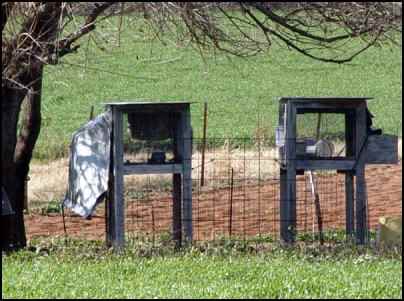
After choosing a breed, the next step will be your choice of housing and care items for your family’s new meat production project. A lot will depend on your climate and the area where you plan to keep the rabbits. Rabbits can be kept inside or outside depending upon your type of cage. It is also an important fact to remember that rabbits do better in the cold than in the heat. This means if you live in a climate that gets very hot in summer make sure to provide plenty of shade, water, and cooling for your rabbits. If you plan to have cages outside in the weather the best type cage is usually referred to as a hutch. This is a wooden cage with wire sides and bottom, with a solid roof. If you have an indoor area such as a barn or shed that will offer protection from the inclement weather then you will only require a wire cage.
When the rabbits reach butcher weight the time has come to decide if you will do the deed yourself or arrange for someone else to butcher the rabbits for you. In my case, most often, I have a friend who does it for me in trade for some of the meat. This works out better for me because I would rather give away some meat than clean up afterwards. However, butchering rabbits is much easier and is far simpler than butchering poultry.
Depending on the one doing the butchering, the way to kill the rabbit is a personal preference. Snapping the neck, slitting the throat or knocking the rabbit in the head are the most common methods used. Remember to plan your butcher date ahead of time so you will be able to withhold feed for about 24 hours before butcher time; this saves a lot more mess when butchering.
The tools you will need for butchering are a sharp skinning knife, a refuse bucket, a bucket or barrel of cold ice water, small pair of dikes, and plastic zipper bags. After the rabbit is dead, it is most common to hang the deceased rabbit by the hind legs on a post or suspended in air in some manner. At this point, some butchers will spray the rabbit’s fur with water to discourage loose hair from flying around the meat when skinned. Next, they split the skin at the back legs below the hocks cutting around the tail and simply peeling the fur right off the body. At this point take the dikes and cut the bone of front legs off.
Now, its time to gut or clean the rabbit; you’ll need to cut from near the anus towards the chest of the rabbit. Try hard not nick or cut the bladder, intestines or other organs so as not to contaminate your meat. Once the body cavity is open remove the entrails, split the chest and remove the heart, lungs, and trachea. Last step is to split the pelvic area and remove rectum.

Use the dikes again to cut the back leg bones above the feet. Take the carcass and put it into the ice water while you work on the next rabbit. When you have finished with the rabbits you are butchering, remove them from the ice water and place them into zip-tight bags. You have just provided your family with fresh rabbit meat.
There are lots of recipes available for preparing rabbit dishes. Basically, any recipe you use with chicken can be used for rabbit with a few minor modifications. Because of the lower fat levels, rabbit meat is dryer than chicken so less cooking time and a lower cooking temperature are both necessary to consider when preparing.
I have fixed many rabbit dishes over the years but the one that my family prefers the most is a sweet-and-sour dish. It requires a little more prep time than, say, an easier crock-pot-type meal but the taste is definitely worth the extra effort that it requires.
If you would like to try the sweet and sour rabbit dish you will first need:
- 2 ½ – 3 lbs of rabbit.
- ½ tsp. Each of salt & pepper
- ½ cup vegetable oil
- 2 Tbsp brown sugar
- 1 ¼ Tbsp cider vinegar
- 4 Tbsp horseradish
- ½ tsp dry mustard
- Green pepper cut into strips
- 1 20 oz can chunked pineapple
- 1 11oz can mandarin oranges
Brown the rabbit in the oil for about 10-12 minutes on each side. Place the browned rabbit in a baking dish. Drain the pineapple but keep the liquid, drain the oranges also. Cover the rabbit with 1/3 of the pineapples and 1/3 of the oranges, then place the green pepper strips over the fruit.
Add brown sugar and vinegar to the reserved pineapple liquid. Pour the juice over the rabbit, cover and bake at 350 degrees for 30 minutes. Puree the remaining pineapple chunks and mandarin orange slices; add horseradish and mustard, mixing well. Pour this over the rabbit, and continue baking for an additional 30 minutes. This is an excellent dish with rice and serves 4-6 people.
Another recipe option that my family enjoys is barbeque rabbit fixed in the crock-pot. This is an easy favorite as it does not require a lot of effort for me. I simply put the whole rabbit in the crock-pot set on low for the day. By evening the meat should be separated from the bones and you can remove them. Pour your favorite barbeque sauce over the remaining rabbit and leave it for another hour or two. Spoon out plates with some baked beans and you have another hearty meal.
You now have all the basics to start raising rabbits for your family table. Rabbits are easy to raise and can be a rewarding project for the homesteader wanting to grow their food. It takes little space and time as well as being one the most inexpensive types of livestock to raise for food production. Rabbit is a true bargain in today’s economy and food market for those wanting to grow and produce healthy meals.
Do you have any information on raising free range rabbits?